Mario Verre, Critico d'arte e curatore di Mostre

Non ci si può occupare criticamente dell'esperienza artistica di Maria Credidio senza analizzare in maniera puntuale i termini del rapporto che l'artista intesse con la dimensione spaziale: le sue installazioni mirano ad istituire un dialogo con lo spazio circostante, mentre i suoi quadri contengono all'interno del campo visivo dei vettori di direzione, funzionali ad indirizzare lo sguardo del fruitore in un senso piuttosto che in un altro. Si veda il caso dell'opera dal titolo Dimora del 2017: la composizione, interamente immersa nel bianco, è incentrata su due triangoli ognuno dei quali orienta il nostro sguardo in spazi esistenti al di fuori della contingenza fisica del quadro; l'asciutta e rigorosa geometria che governa l'immagine, trasporta idealmente lo spettatore in un luogo altro. Sono ancora due triangoli ad assurgere ad indiscussi protagonisti in Inversione verso l'illimite: in questo lavoro l'artista fa confluire, nell'arcaica simbologia della forma del triangolo, il linguaggio della scrittura, e subisce le fascinazioni della poesia visiva che, vissuta una stagione di irripetibile fermento culturale tra la metà degli anni sessanta e la metà degli anni settanta a Napoli, grazie al gruppo Continuum sotto l'egida di Luciano Caruso, ha visto in Calabria in Mario Parentela uno straordinario interprete. Quindi sia la geometria, presentata in forme pure, che la scrittura, costituiscono due nuclei di assoluto rilievo attorno a cui ruotano le sperimentazioni della nostra artista.
La catarsi, secondo il dizionario della lingua italiana Treccani, "nella religione greca, nella filosofia pitagorica e in quella platonica, indicava sia il rito magico della purificazione, inteso a mondare il corpo contaminato, sia la liberazione dell'anima dall'irrazionale". A questo tema l'artista dedica un lavoro, composto da nove quadri, quindi una sorta di installazione, dal titolo Katharsis in cui non è affatto casuale la ripresa del termine greco proprio perché per la Credidio l'arte deve sia decontaminare l'uomo dalle brutture dello spirito, che costituire elemento di salvezza capace di avvicinarlo a Dio. Katharsis è un'opera site specific per il Museo Archeologico della Sibaritide situato in prossimità degli scavi archeologici di Sibari nel comune di Cassano Jonio. Durante una visita al museo, l'interesse dell'artista fu catturato da alcune lamine orfiche; si tratta di manufatti d'oro, anticamente posti nella mano, nella bocca o sul petto del defunto allo scopo di ricordargli la condotta da tenere nel viaggio nell'aldilà. Uno di questi preziosi oggetti recava una scritta recitante: "Io, che son figlio del cielo e delle stelle, vengo a te per abbeverarmi al fiume". Mossa da una riflessione sul concetto di purificazione, condizione essenziale del defunto nel percorso ultraterreno, la Credidio ha realizzato Katharsis, lavoro composto da nove quadri, come le lettere del titolo dell'opera, in cui la forma ovale, abitata da grovigli di lettere che riprendono le parole della lamina, rimanda a quella del volto umano. Ma catarsi nel sistema di valori dell'antica Grecia era anche, come scritto precedentemente, "liberazione dell'anima dall'irrazionale". Siamo quindi giunti a un punto nevralgico della ricerca della Credidio concentrata sulla realizzazione di opere razionali. L'artista cioè propone opere in cui, eliminato ogni elemento meramente decorativo e virate le scelte coloristiche a favore dell'utilizzo del bianco e del nero, siano forme essenziali, geometriche, primigenie come triangoli, sfere e cilindri a regolare il dettato visivo, basato su criteri di ordine e compostezza formale. L'artista assimila e interpreta in maniera coerente la massima enunciata da Paul Cézanne di "trattare la natura secondo il cilindro, la sfera e il cono": sia le sculture che i quadri della Credidio sono infatti intimamente attraversati da una logica geometrica che anima le superfici e dà vita ai corpi scultorei. La catarsi di cui argomentato prima, che si traduce in una ponderata razionalità su cui si fondano tali proposte visive, poggia su immagini costruite seguendo precisi rapporti matematici, come ben evidenziato in Abitare la geometria in cui il quadrato nero su fondo nero richiama quello celeberrimo di Kazimir Malevic. Il suprematista russo, nella sala a lui dedicata alla mostra di Pietrogrado del 1915 dal titolo 0.10. L'ultima mostra di quadri futurista, aveva esposto il famoso Quadrato nero appendendolo angolarmente appena sotto il soffitto nella consueta collocazione domestica delle icone, tanto da risultare intriso di un senso mistico. La nostra artista, che vive e riveste il ruolo di operatrice culturale nel centro arbresh di San Demetrio Corone (CS) e che dal 2001 è presidente della Biennale d'arte contemporanea della Magna Graecia del paese cosentino, carica il quadrato nero di Abitare la geometria di una valenza quasi religiosa e sembra presentarlo allo spettatore perché lo consideri sullo stesso piano delle icone utilizzate per l'adorazione nell'ambito del rito bizantino praticato nella comunità in cui lavora.
Le installazioni della nostra si inquadrano nell'alveo di un linguaggio votato all'eleganza e improntato alla raffinatezza, valori formali perseguiti abolendo ogni qualsivoglia motivo possa risultare inutilmente aggiuntivo o, peggio ancora, pletorico rispetto alla composizione e allo spirito che la ispira, come dimostrato in V-SYNC in cui le summenzionate evidenze strutturali si manifestano in maniera inequivocabile: l'opera, interamente giocata sul nero, presenta in alto al centro una superficie specchiante; questa fuoriesce dal lungo tappeto che dalla parete scivola a terra. Un filo di piombo, di quelli usati dai muratori, fissato al centro della superficie specchiante, arriva fino a pochi centimetri dal pavimento su cui è posta una sfera chiusa quasi a protezione da tre lunghe strutture cilindriche.
L'artista calabrese nel caso specifico propone una struttura basata su un coerente equilibrio di rapporti e su perfette armonie di volumi. Come Piero della Francesca costruiva i suoi quadri seguendo precise logiche matematiche e geometriche (non casualmente il filo di piombo sospeso di V-SYNC riporta alla mente di chi scrive la Pala di Brera, realizzata dall'artista aretino, in cui l'uovo di struzzo sospeso alla conchiglia dell'abside è posto perfettamente sopra la testa della Vergine), così le opere della Credidio, come quella ora in esame, dimostrano come l'artista abbia il controllo registico dei volumi.
Gli antichi Greci con Kosmos, che nel corrente linguaggio scientifico è sinonimo di universo, indicavano quest'ultimo come il concetto di ordine, quello assunto dall'esercito schierato per la battaglia; in filosofia il termine denota un sistema ordinato e armonico e in russo la parola significa "spazio". Questi concetti (ordine, armonia, spazio) si rivelano principi connaturati ai lavori della Credidio, incentrati, siano essi quadri, sculture o installazioni sul frequente ricorso a strutture ed elementi plastici e pittorici modulari sottoposti a reiterazione. Ad esempio in La via la ripetizione di elementi formalmente uguali crea un universo segnico mentre in Nel buio dello specchio l'artista mediante sei vetri di varia misura ma di identica forma organizza l'impianto visivo.
L'arte di Maria Credidio deriva dalle ricerche minimaliste e analitiche che intorno al 1960 si contrapposero all'allora imperante action painting americana a all'informale europeo. Opere come Untitled 02, Untitled 03, Texture 03 infatti sono caratterizzate da antiespressività, impersonalità e da una certa freddezza emozionale, valori formali tipici della Minimal Art. La nostra artista cioè riduce i suoi lavori, come avrebbe scritto John Graham, artista americano di origine russa, "al minor numero possibile di ingredienti, allo scopo di scoprire l'ultima, logica destinazione della pittura nel suo processo di astrazione" (Graham, 1937); la Credidio non mira a dimostrare particolari doti esecutive ma ad abolire in maniera perentoria ogni elemento visivo superfluo, puntando, per riprendere le parole di Giulio Carlo Argan, "all'eliminazione di ogni significato implicito e all'individuazione di elementi strutturali elementari" (Argan, 1970), come risulta palese nell'installazione dal titolo Nel buio dello specchio.
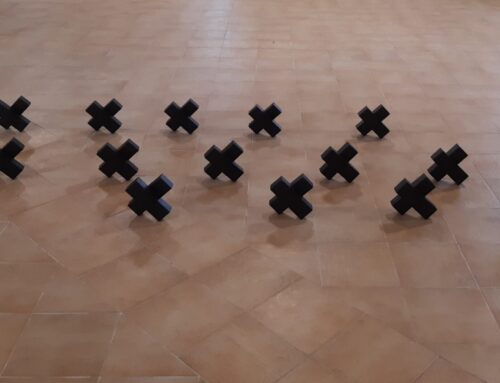
La mera esibizione dei volumi e la loro improrogabile autoreferenzialità rappresentano i principi costitutivi di La via e di Untitled del 2018, opere in cui il contenuto strettamente artistico viene ridotto ai minimi termini a favore di una decisa fisicità. La soggettività dell'artista viene quindi azzerata a discapito della componente prettamente emozionale dell'opera. Una considerevole parte del corpus dei lavori si compone di elementi modulari che, reiterati in maniera pedissequa (come in Instabili equilibri e Linea di terra e di aria) o presentati apportando minime variazioni (come avviene in One and a half of a half), determinano una ridondante ripetitività delle forme; è in ultima analisi la mera dimensione fattuale ad animare queste creazioni. Se l'indifferenza per le qualità formali ed espressive del quadro rappresenta una peculiare cifra stilistica della nostra artista (si consideri a questo proposito opere come Untitled 03 e Ultimo), è pur vero che questo tratto distintivo convive con una marcata tensione verso la trascendenza, l'assoluto e l'universale tale da registrarsi un frequente ricorso a forme geometriche primarie.
Un "minimal art content" ("contenuto d'arte minimale"), per dirla usando le parole del critico e filosofo britannico Richard Wollheim, contraddistingue le proposizioni plastiche e pittoriche di Maria Credidio: una costruzione dell'immagine ridotta ai minimi termini, l'antiespressività, un'economia assoluta e ben calibrata degli elementi formali, l'abolizione della dimensione emozionale, l'impersonalità sono tutte coordinate attraverso cui leggere correttamente l'esperienza creativa, avvincente quanto meritevole di maggiore attenzione, di questa donna del Sud, caparbia creatrice di emozioni visive freddamente oggettuali così come spiritualmente trascendenti, tra terra e cielo.
Catanzaro, aprile 2019
Maria Credidio. A minimal art between objectiveness and transcendence
by Mario Verre

One cannot deal critically with the artistic experience of Maria Credidio (born in 1957 in Terranova da Sibari-Calabria-Italy), without analyzing in detail the relationship the artist weaves with the spatial dimension: her installations aim to establish a dialogue with surrounding space, while her paintings contain, within the visual field, some directional vectors functional to steer the viewer's eye in one direction, rather than another. See the case of the work Dimora (2017): the composition completely immersed in the white, is centered on two triangles, both of which direct our gaze into spaces outside the physical contingency of this specific work. The essential and linear geometry that rules this image, ideally leads the viewer somewhere else. In Inversione verso l'illimite (2016) the protagonists are still two triangles: in this work, our artist brings the language of writing into archaic symbolism of the shape of the triangle, and undergoes the fascinations of visual poetry. The Calabrian artist Mario Parentela, between mid-60s and 70s has been an extraordinary interpreter of visual poetry, thank to Continuum group in Naples, that had experienced a season of unrepeatable cultural ferment under the aegis of Luciano Caruso. So, both the geometry presented in pure shapes and the writing compose two nuclei of absolute importance around which the experiments of our artist revolve.
According to the Dizionario Treccani della lingua italiana, "in the Greek religion, in the Pythagorean and Platonic philosophy, catharsis means both the magic rite of purification, intended to cleanse the contaminated body, and the liberation of the soul from the irrational". To this subject, Credidio has dedicated the work Katharsis (2012), a sort of installation consisting of nine frames, in which the revival of the Greek term is not at all accidental, because, for our artist, art must both decontaminate man from ugliness of the spirit, and be an element of salvation, to bringing him closer to God. Katharsis is a site-specific work for the Museo Archeologico della Sibaritide, (closeto the archaeological excavations site of Sibari in Calabria). During a visit to the museum, the interest of the artist had been captured by some Orphic plates; these are gold handworks, anciently placed in the hand, or in the mouth, or on the chest of the deceased, in order to remind him the conduct to keep in the journey into the afterlife. One of these precious objects had this statement: "Me, who am a son of the sky and the stars, I come to you to drink at the river". Moved by a reflection upon the concept of purification, an essential condition of the deceased in the afterlife, the work Katharsis has nine frames as many as the letters of the title, in which every oval shape, inhabited by tangles of letters that recall the words of the each plate, refers to that of the human face. Catharsis in the value system of ancient Greece was also, as written previously, "liberation of the soul from the irrational". So, we have come to a focal point of research of Credidio. She has been concentrated on the realization of "rational" works. In other words, our artist proposes works in which, eliminating every merely decorative element and turning the coloristic choices in favor of the use of white and black. They are essential, geometric, primitive shapes such as triangles, spheres and cylinders to regulate the visual dictation, based on criteria of order and formal composure. The artist assimilates and portrays, in a coherent way, the quote enunciated by Paul Cézanne "treating nature according to the cylinder, the sphere and the cone":
both sculptures and the paintings of Credidio are in fact intimately crossed by a geometric logic animating the surfaces and giving life to sculptural bodies. Catharsis as discussed above, which translates into a weighted rationality on which these visual proposals are based, is founded on images built following precise mathematical relationships, as well highlighted in Abitare la geometria (2017), where the black square on a black background, reminds us the famous work by Kazimir Malevich. At the " 0,10-Last Futurist Exhibition of Paintings", in Pietrograd, in 1915, in the room dedicated to him, the Russian supremacist artist had exposed his famous Black Square, by hanging it angularly just below the ceiling in the usual domestic placement of the icons, so as to be imbued with a mystical sense. Credidio, who lives and plays the role of cultural worker in the Arbresh community of San Demetrio Corone, in Calabria, and who, since 2001 is also the president of the Biennale d'arte contemporanea della Magna Graecia in this village not far from Cosenza, she gives the black square picture of Abitare la geometria an almost religious valence and seems to present it to the viewer, in order to be considered on the same level as the icons used for adoration within the Byzantine rite practiced in the community in which our artist works.
The installations of our artist are framed in the channel of a devoted language, elegance and refinement, formal values pursued, abolishing any reasons not necessarily additional, or even worse, plethoric, over the composition and spirit by which she is inspired, as demonstrated in the work V-SYNC (2019), in which the above mentioned structural evidence manifest themselves unequivocally: the work, entirely played on black, has, at the top, in the centre, a mirroring surface. This comes out from the long carpet that slides from the wall to the ground. A plumb line, of those used by the bricklayers, fixed in the centre of the surface mirror-like, it reaches a few centimetres from the floor on which a closed sphere is placed almost to protect from three long cylindrical structures.
The Calabrian artist, in this specific case, proposes a structure based on a consistent balance of relationships and perfect harmonies of volumes. As Piero della Francesca has built his paintings following precise mathematical and geometric logics, (not by chance, the suspended plumb line of Vertical sync comes to mind to whom is writing), the Pala di Brera (1472) painted by the Tuscan artist, in which the ostrich egg suspended on the shell of the apse, is placed perfectly above the head of the Virgin), so that, the works of Credidio, like the one now being examined, show how the artist has the directorial control of volumes.
Ancient Greeks, with the word Kosmos, which in the current scientific language is synonymous of universe, indicated this as the concept of "order", the same one assumed by the army deployed for the battle. In philosophy the term denotes an orderly and harmonic system; and in Russian the word means "space". These concepts (order, harmony, space) reveal themselves as principles inherent to the works of Credidio, whether they be paintings, sculptures or installations focused on the frequent use of modular plastic and pictorial elements subjected to reiteration. For example, in La via (2018), the repetition of elements formally equal creates a universe of signs, while in Nel buio dello specchio (2017) our artist, through six glasses of various sizes but of identical form, she organizes the visual implant.
The art of Maria Credidio derives from the minimalist and analytical researches that around 1960 contrasted with the then prevailing American action painting and the European informal. The works such as Untitled 02 (2018), Untitled 03 (2018), Texture 03 (2018) are, in fact, characterized by no expressiveness, impersonality, and by a certain emotional coldness, formal values typical of "Minimal Art". That is, as John Graham, an American artist of Russian origin, would have written, our artist reduces her works "to the fewest possible number of ingredients, in order to discover the latest, logical destination of painting in its process of abstraction". (Graham, 1937);
Credidio does not aim to prove her particular executive qualities but to abolish any superfluous visual element, in a peremptory way, aiming, just to recall the words by Giulio Carlo Argan, "to eliminate all implicit meaning and to identify elementary structural elements" (Argan, 1970). That is clear in the installation above Nel buio dello specchio.
The mere display of volumes and their urgent self-referentiality represent the constitutive principles of La via and Untitled (2018), works in whose the strictly artistic content is reduced to the minimum terms in favor of a decisive physicality. The subjectivity of our artist is then reset to the detriment of the purely emotional component of the works. A considerable part of the corpus of works is composed of modular elements which, reiterated in a faithful way (as in Instabili equilibri (2017) and Linea di terra e di aria (2017) or presented with minimal variations [as in One and a half of a half (2017)], determines a pleonastic repetitiveness of shapes. After all, is the mere factual dimension to animate these creations. If the indifference to the formal and expressive qualities of the painting represents a peculiar stylistic code of our artist [see works Untitled 03 and Ultimo (2016)], it's true this distinctive trait coexists with a marked tension towards transcendence, absolute and universal, so as to register a frequently use of primary geometric shapes.
By using the words of Richard Wollheim, the British critic and philosopher, a "minimal-art content" distinguishes the plastic and pictorial propositions of Maria Credidio: a construction of the image reduced to the minimum, no-expressiveness, an absolute and well-balanced economy of formal elements; the abolition of the emotional dimension, and impersonality they all are the coordinates through which reading correctly the creative experience so compelling and deserving greater attention, of this woman of the South, stubborn creator of coldly conceptual visual emotions, as spiritually transcendent, between earth and sky.